
15. SEXUAL DIMORPHISM OF MACAIRODONTINEAN FELINES
Sexual dimorphism is the set of morphological differences between males and females of the same species.
In mammals, sexual dimorphism is primarily manifested in body mass. In extant felids, males are larger than females, and this difference is particularly pronounced in some species, such as lions (where males, in addition to their characteristic mane, have a body weight that is 1.5 times greater than the body weight of females). In other felid species, such as the jaguar, the size differences are smaller.
In Machairodus aphanistus, which is the large-sized macairodontine species that is represented in the Cerro de los Batallones deposits, the upper canines would not stand out much with the mouth closed, but with the mouth open the difference compared with modern felines would be obvious.
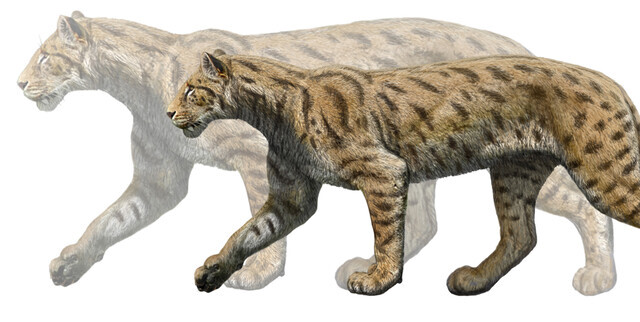 Machairodus aphanistus, male and female.
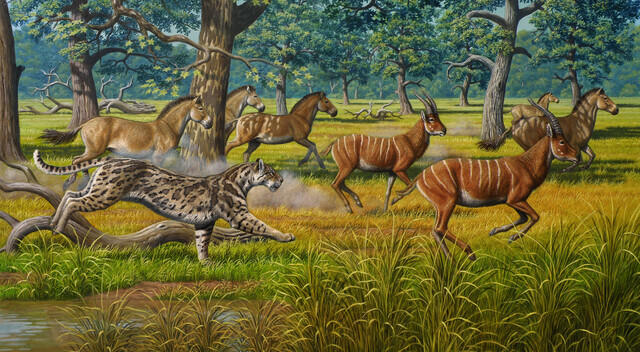 Despite having adaptations for jumping and retractable claws, the large size of Machairodus aphanistus would have made it difficult to climb trees, and virtually all of its activity would have thus taken place on the ground.
Illustration: M. Antón
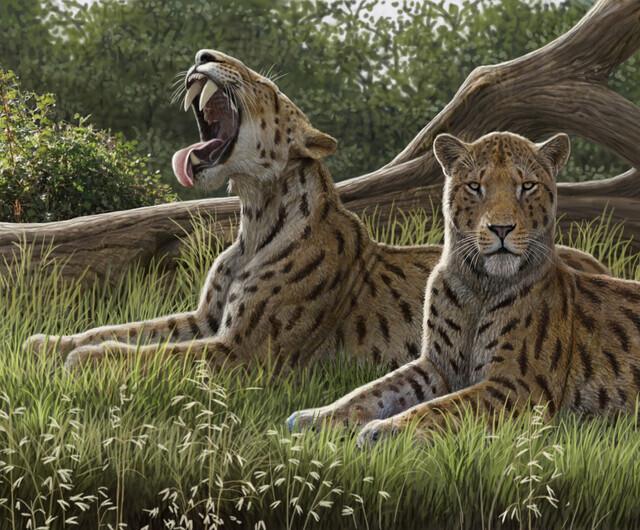 Regarding behaviour, in the most dimorphic extant species, males compete more intensely for access to females, hence, it is reasonable to assume that the same behaviour would have occurred in fossil species.
Illustration: M. Antón
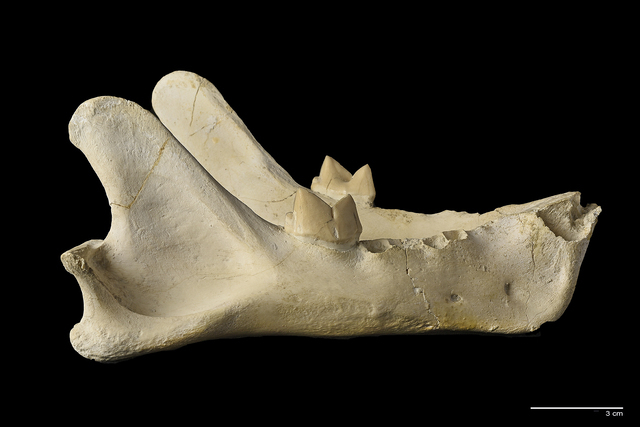
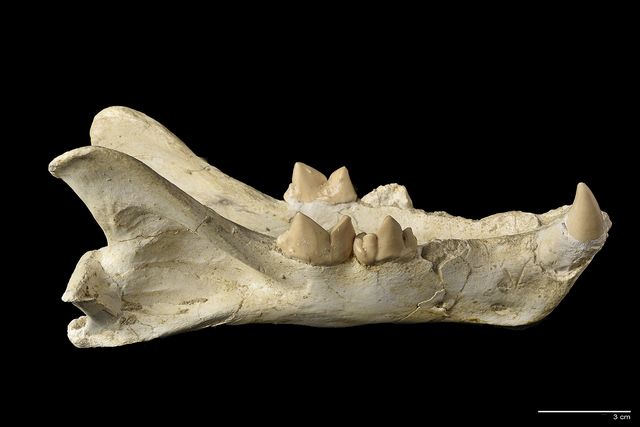
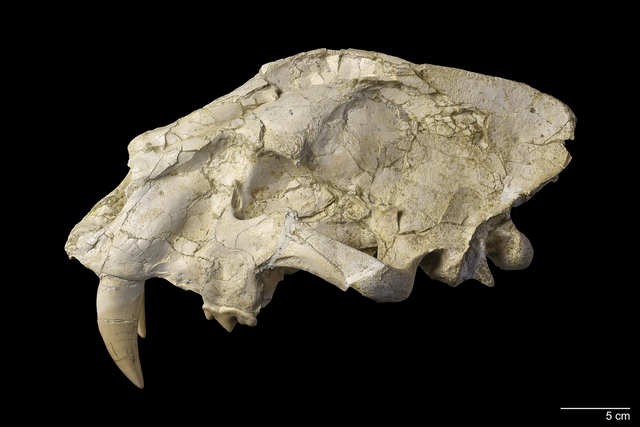
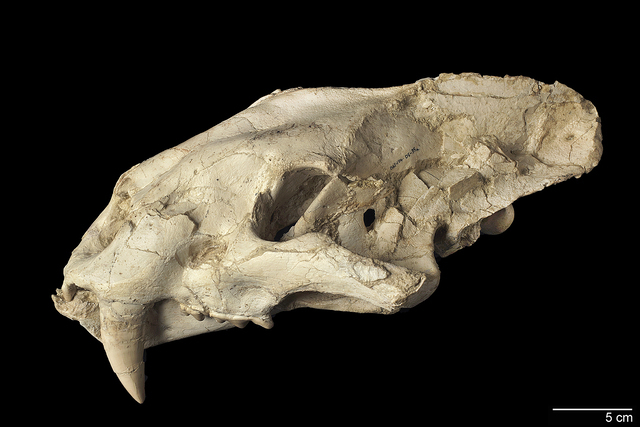
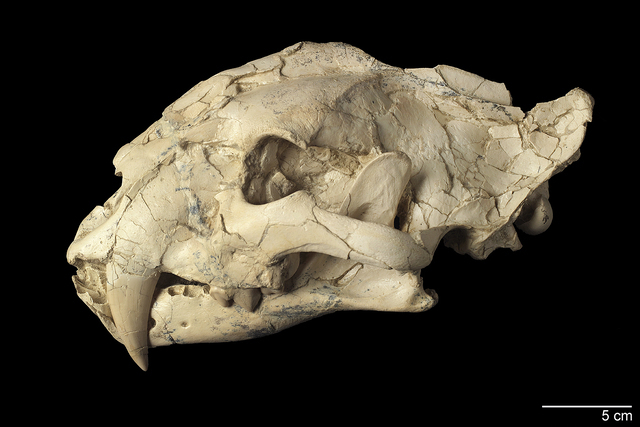
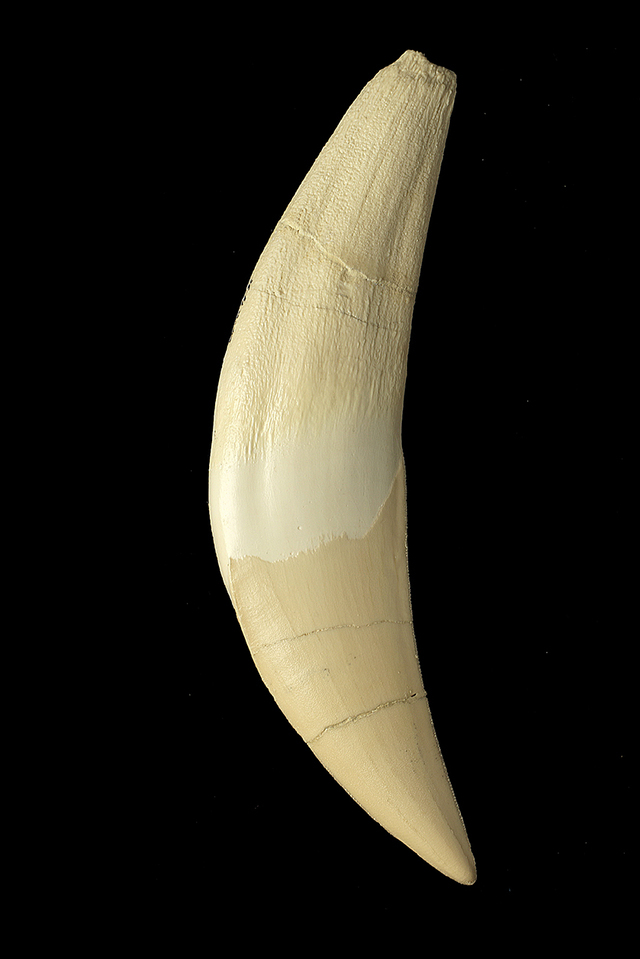
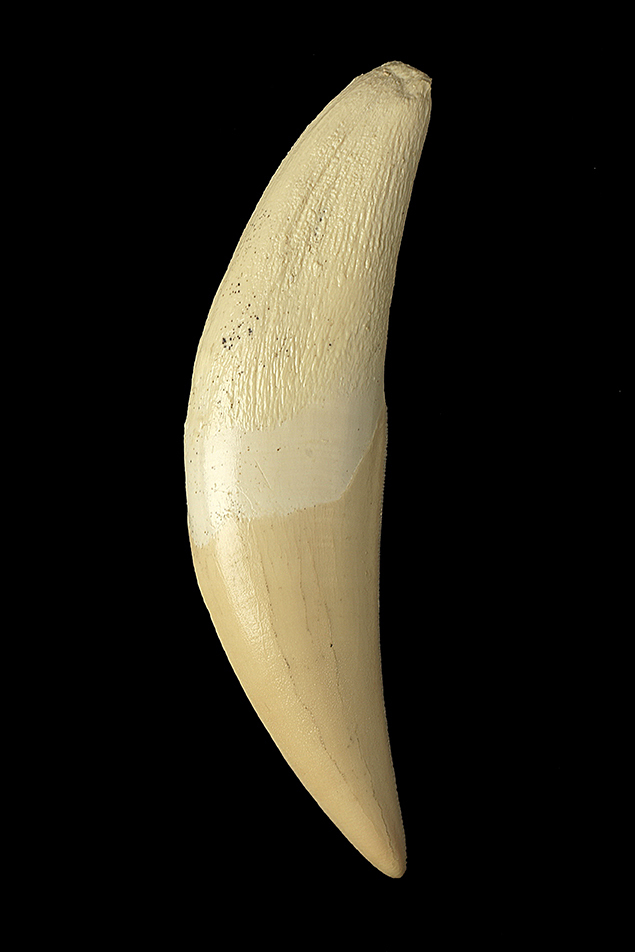
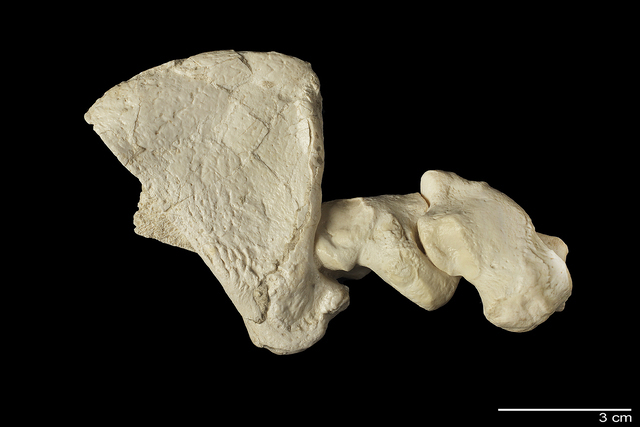
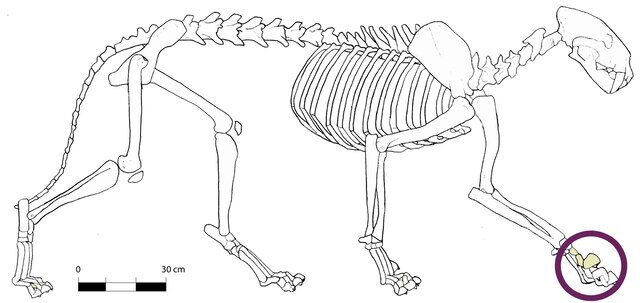 Machairodus aphanistus