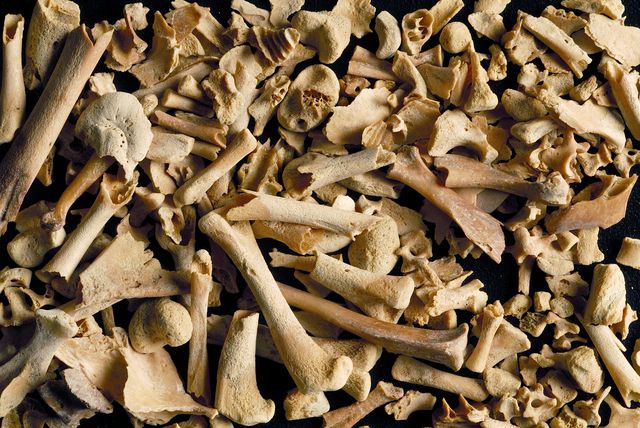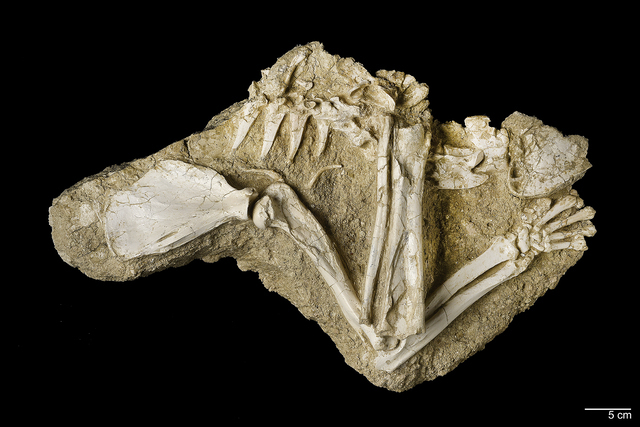
Promegantereon ogygia
Bone bed
Cerro de los Batallones 1 (Torrejón de Velasco)
Upper Miocene, Vallesiense (11-9 Ma)
Sometimes, fossil remains are found forming dense concentrations of bones known as bone beds. In this case, it is formed by an assemblage of bones from at least three individuals of a medium-sized sabre-toothed carnivore species, Promegantereon ogygia.
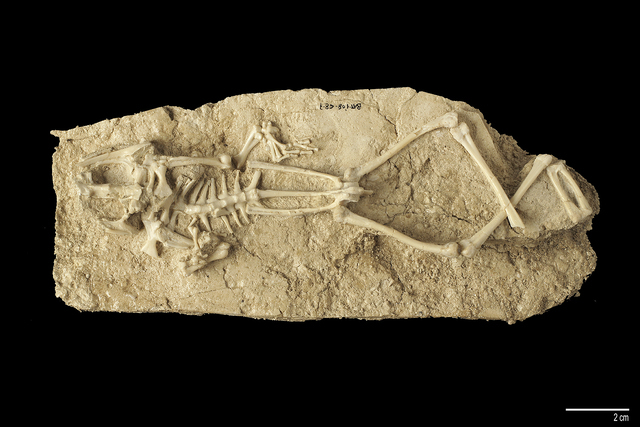
Pelophylax pueyoi
Skeleton
Cerro de los Batallones 1 (Torrejón de Velasco)
Upper Miocene, Vallesiense (11-9 Ma)
Articulated skeleton of the “green frog” from Cerro de los Batallones 1. It is one of the best-preserved frog specimens in the Spanish fossil record, and corroborates the existence of periods of waterlogging in the cavities (via pseudokarstic processes) of Cerro de los Batallones.
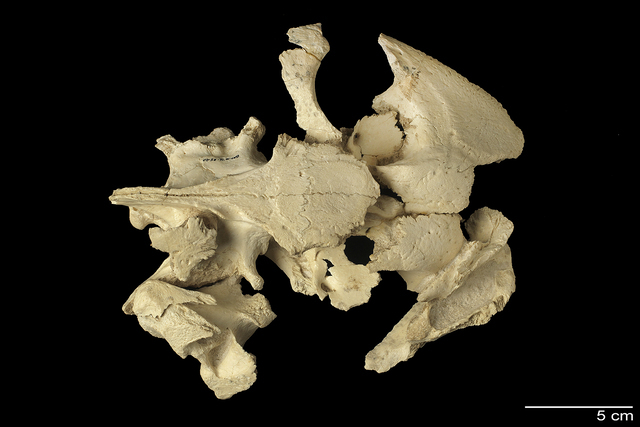
Titanochelon bolivari
Skull
Cerro de los Batallones 1 (Torrejón de Velasco)
Upper Miocene, Vallesiense (11-9 Ma)
This specimen is a unique case of fossil diagenesis, in which the bones of a turtle skull have separated from each other, thus preventing skull deformation.
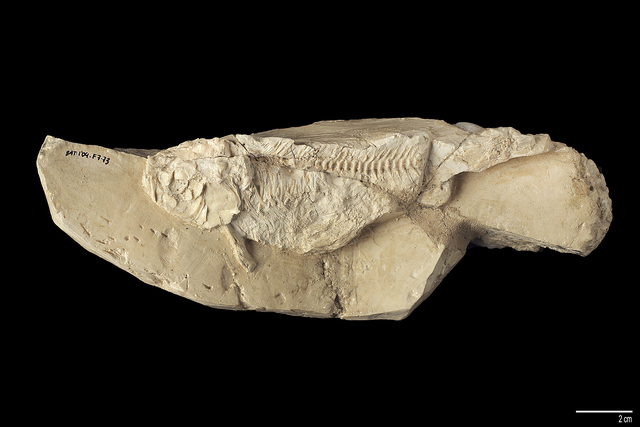
Teleost fish skeleton
Cerro de los Batallones 1 (Torrejón de Velasco)
Upper Miocene, Vallesiense (11-9 Ma)
The discovery of an articulated teleost fish skeleton in continental detrital sediments is exceptional, as the skeletal remains of these vertebrates are usually disarticulated. Its presence at the Cerro de los Batallones 1 site was essential, in order to demonstrate the existence of freshwater zones in the vicinity of the site.
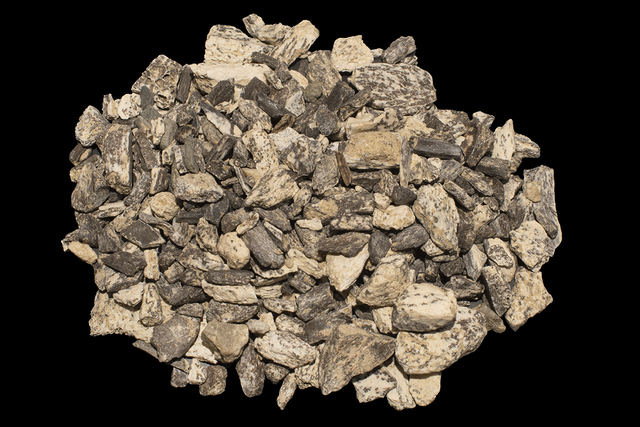
Splintered bone fragments
Middle Miocene (16-11 Ma)
Somosaguas (Madrid)
During the biostratinomic phase, bones can undergo all kinds of alterations, as in this case, where they have become small, heterogeneous splinters accumulated en masse in flows formed by torrential rains. Despite this, the vertebrate fossil assemblages of Somosaguas constitute one of the richest assemblages in the region in terms of species diversity.
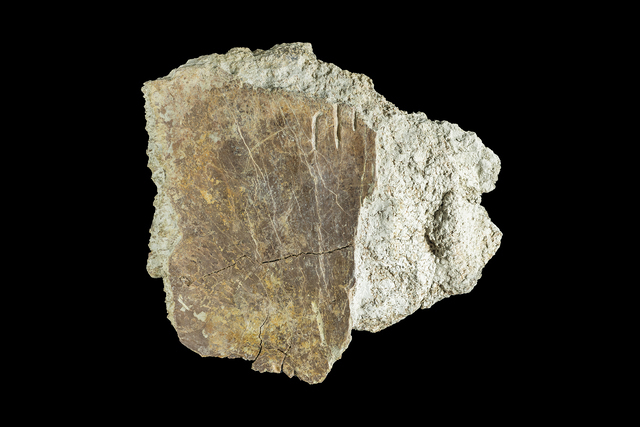
Titanochelon bolivari
Plate
Makro – Las Rejas (Madrid)
Middle Miocene (16-11 Ma)
In many vertebrate species, such as the Madrid turtles from the Miocene, some of their skeletal elements are preferentially preserved, with individual plates and complete shells preserved, but only rarely are there remains of their appendicular or cranial skeletons. This site is exceptional for the number and quality of the remains found.
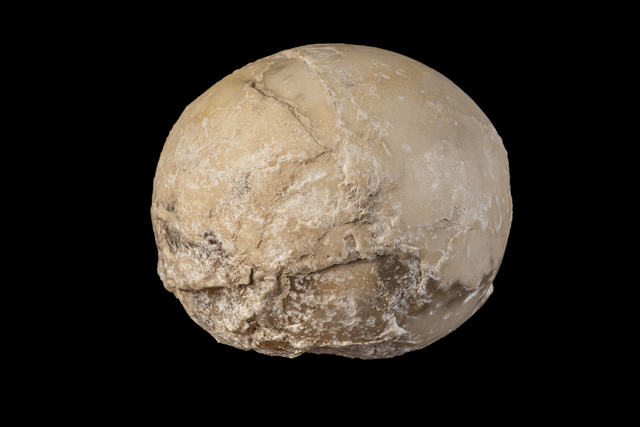
Titanochelon bolivari
Egg
Cerro de los Batallones 10 (Torrejón de Velasco)
Upper Miocene, Vallesiense (11-9 Ma)
The presence of complete giant tortoise eggs is an example of the good preservation of the fossils at Cerro de los Batallones 10, and it also indicates that the cavity served as a nesting site for giant tortoises.
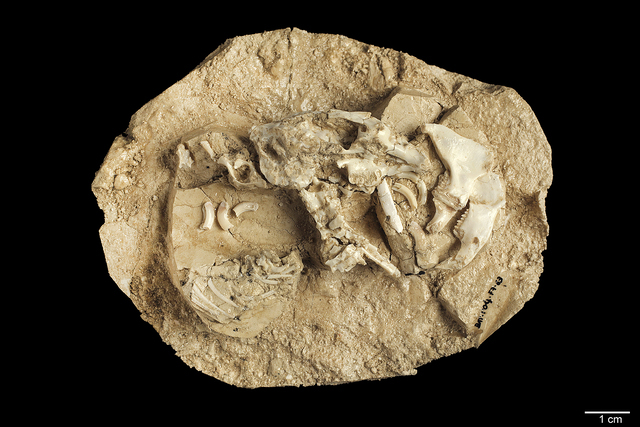
Prolagus crusafonti
Bone assemblage
Cerro de los Batallones 1 (Torrejón de Velasco)
Upper Miocene, Vallesiense (11-9 Ma)
The presence of small mammals in the fossil record is usually related to pellets and faeces of birds of prey or carnivores during their predatory activity. Associations of skeletal elements in anatomical connection, as in this case, are rare.