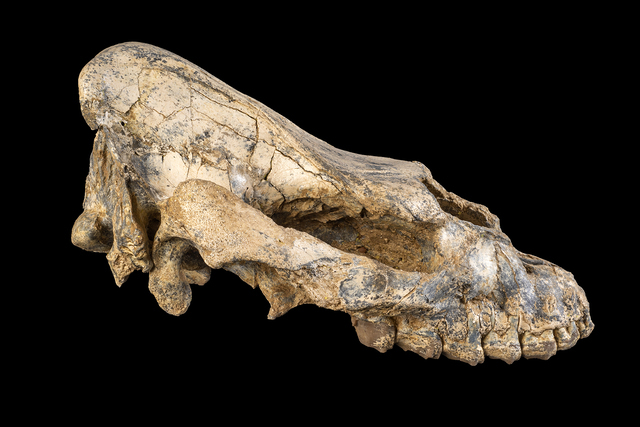
Alicornops simorrensis
Skull
Moraleja de Enmedio
Middle Miocene (16-11 Ma)
The Moraleja de Enmedio site is, along with Paracuellos-3, one of the most important from the Upper Aragonian (late Middle Miocene). In both, the fossiliferous layers formed by arkosic sands extend considerably. The characteristic rhinoceros of these sites was Alicornops simorrensis, a hornless species whose short, robust limbs gave it an appearance which resembles more a hippopotamus than a rhinoceros.
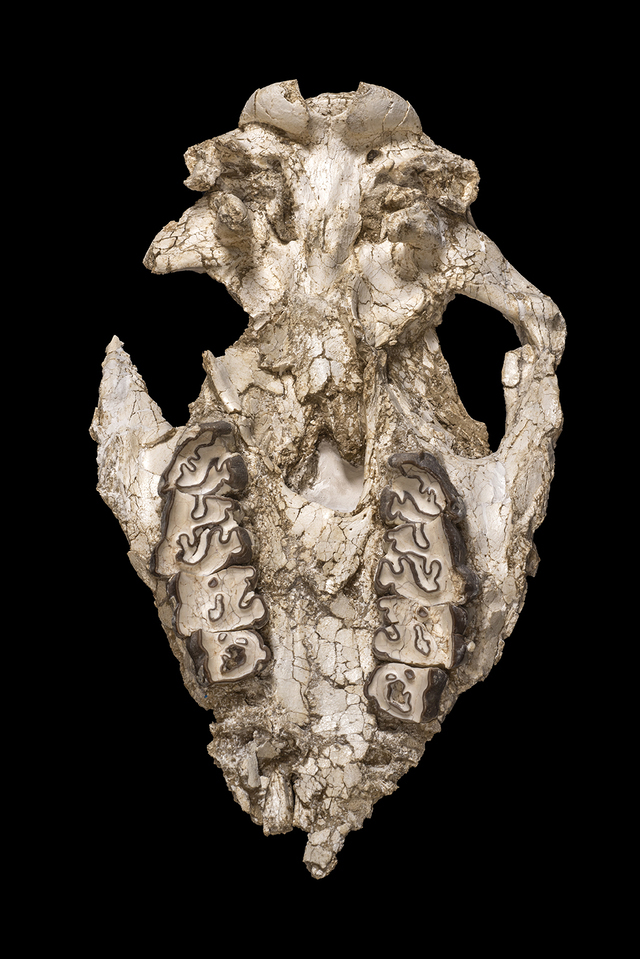
Hispanotherium matritense
Skull
Príncipe Pío site (Madrid)
Middle Miocene (16-11 Ma)
This site has provided the first complete skull of Madrid’s most typical species, Hispanotherium matritense (rhinoceros), which is associated with a diverse fauna that includes primitive sabre-toothed tigers, and ancestors of red pandas.
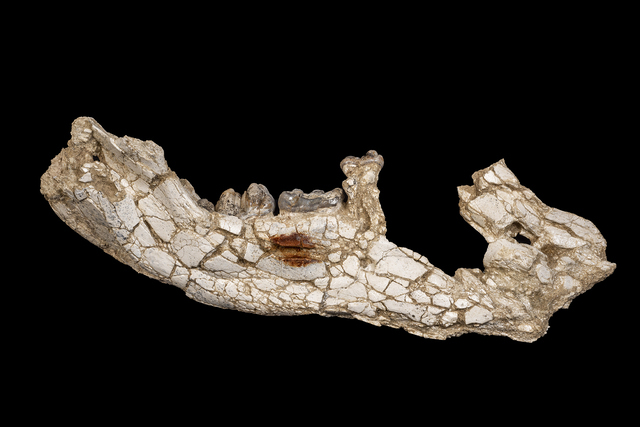
Gomphotherium angustidens
Mandible
Somosaguas (Pozuelo de Alarcón)
Middle Miocene (16-11 Ma)
Accidentally discovered in 1996, the site on the Somosaguas Campus of the Complutense University has yielded the remains of dozens of mammal species. As part of a research project that was initially directed by the renowned palaeontologist Nieves López, it has been systematically excavated since that time. Today, it is recognised as one of the most significant sites in the region, especially for the variety of species from the Middle Miocene.
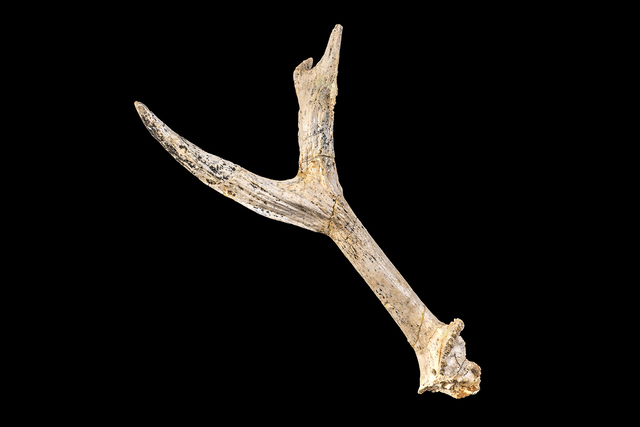
Heteroprox moralesi
Antler
Alhambra 1 (Madrid)
Middle Miocene (16-11 Ma)
The site contains significant concentrations of fossils that were discovered during the construction of Calle Alhambra (Alhambra Street). It was excavated in 1991, and a large number of macromammal fossil remains were recovered, including this antler of Heteroprox moralesi, a primitive deer that inhabited Madrid during the Miocene.
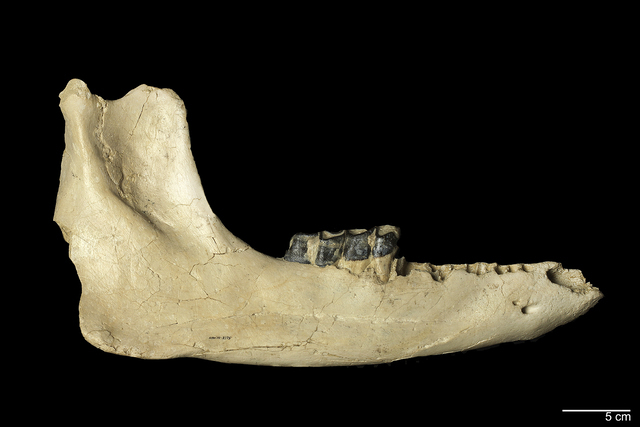
Hispanotherium matritense
Hemimandible
Mahou beer factory (Madrid)
Middle Miocene (16-11 Ma)
This hemimandible (half-mandible) of a typical Madrid rhinoceros comes from the old Mahou beer factory, located near other palaeontological sites, such as those located at Estación Imperial (railway station), and also in the old Las Cambroneras neighborhood.
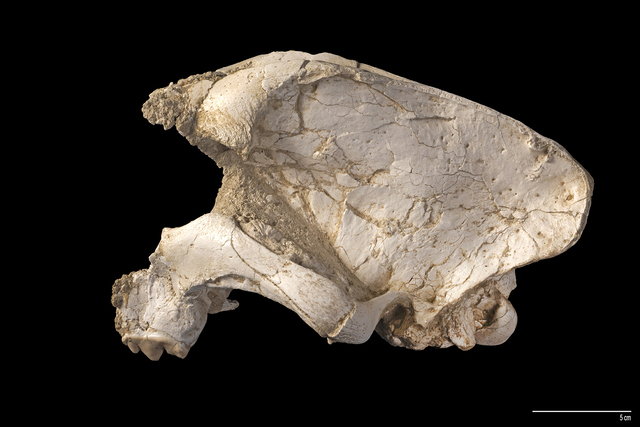
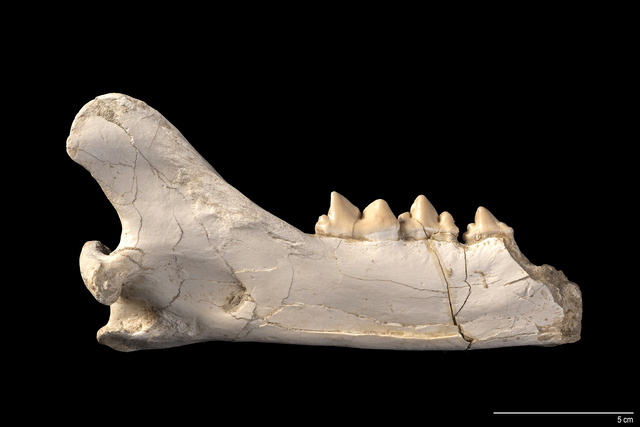
Machairodus aphanistus
Skull and mandible
Cerro de los Batallones (Torrejón de Velasco)
Upper Miocene, Vallesian (10-8 Ma)
In July 1991, mining operations at Cerro de los Batallones uncovered the most important palaeontological site in the Madrid region. These remains of Machairodus aphanistus (partially destroyed by the excavators that were preparing the mine) and Magericyon anceps are among the first fossils discovered at the site.
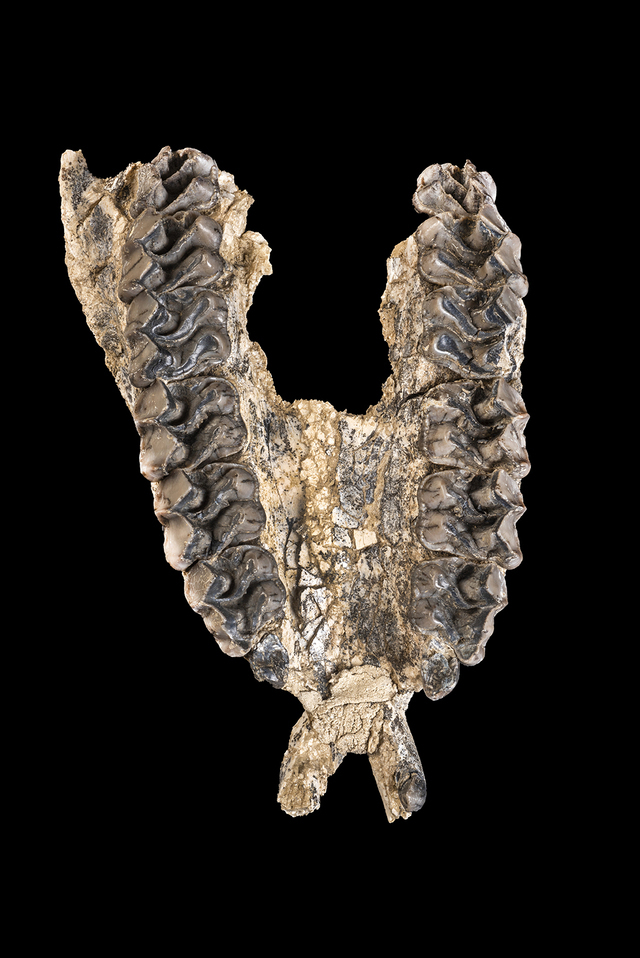
Anchitherium sp.
Upper jaw
Estación de Carpetana (Madrid)
Middle Miocene (16-11 Ma)
The underground trains station of Carpetana site (Estación de Carpetana) was discovered in 2008 during renovations to this underground railway system. Palaeontologically, this site is one of the richest in the region. Primitive horses (Anchitherium), mastodons (Gomphotherium angustidens), rhinoceroses, ruminants, giant tortoises, and carnivore remains such as Amphicyon and Hemicyon have been recovered.
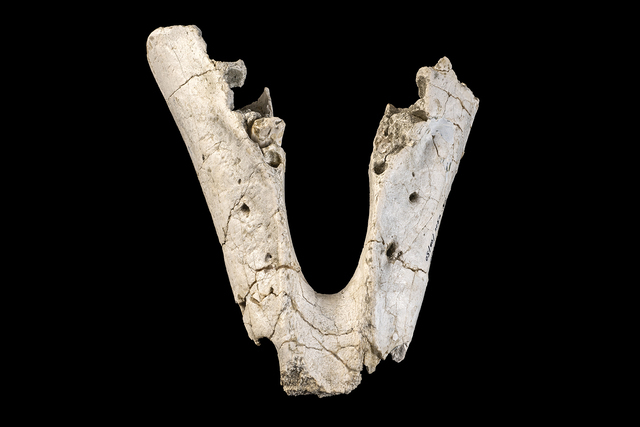
Gomphotherium angustidens
Juvenile mandible
M-30 orbital motorway burial site (between Marqués de Monistrol and Puente de Segovia, Madrid)
Middle Miocene (16-11 Ma)
The underground excavation of the M-30 orbital motorway at the beginning of the 21st century affected areas of great archaeological and palaeontological value. For years, the follow-up work yielded a wide variety of discoveries, spanning chronologically from the Late Cenozoic to the present day.
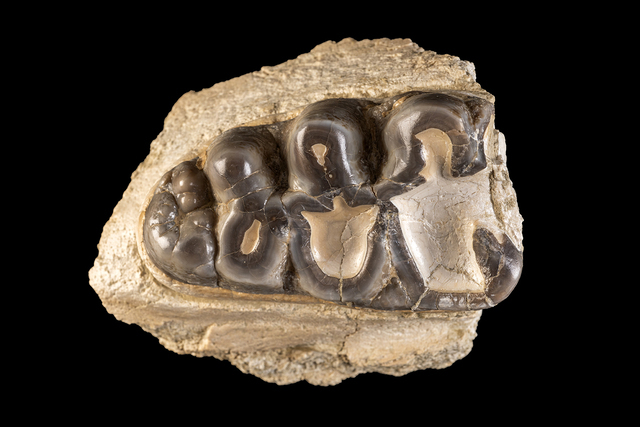
Gomphotherium angustidens
Molar
Hydroelectric Power Plant (Madrid)
Middle Miocene (16-11 Ma)
Although this site is known since 1920, palaeontological monitoring work associated with the M-30 motorway construction rediscovered the Hydroelectric Power Plant site. More than a thousand new fossils from the Middle Aragonian were extracted: mastodons, wild boars, deer, horses, bovids, and carnivores.
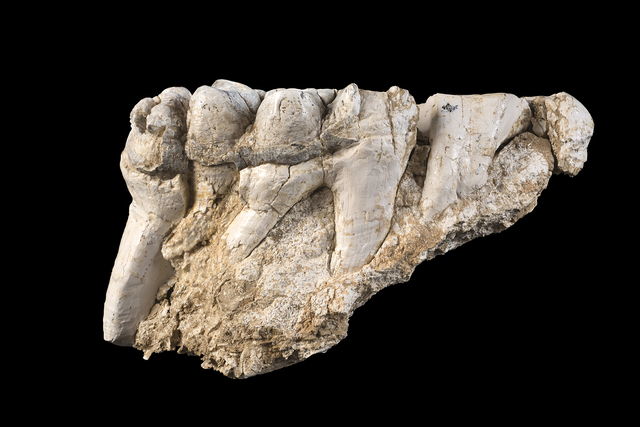
Gomphotherium angustidens
Upper jaw
Barajas 16 (Barajas)
Middle Miocene (16-11 Ma)
The Barajas Airport expansion project involved a massive amount of earthworks, unprecedented in Madrid. During the construction work, new palaeontological and archaeological sites were discovered, some of them being very extensive.
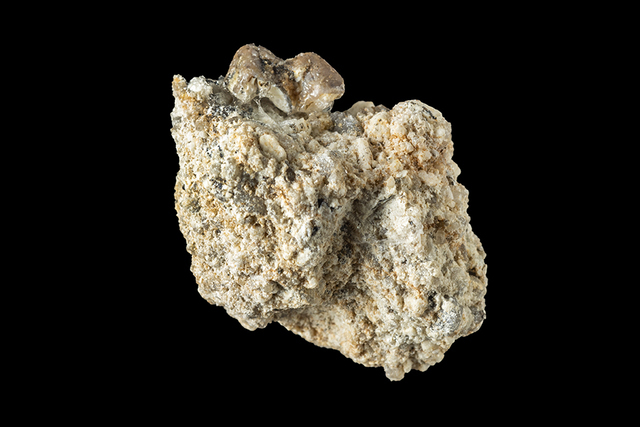
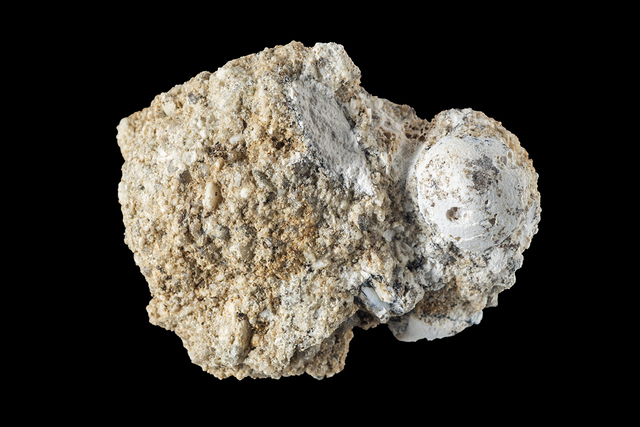
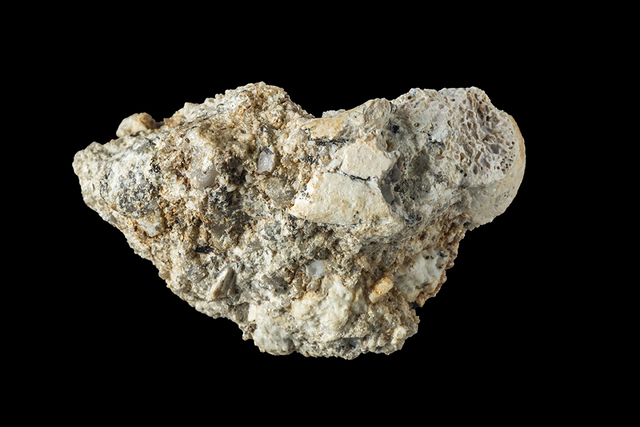
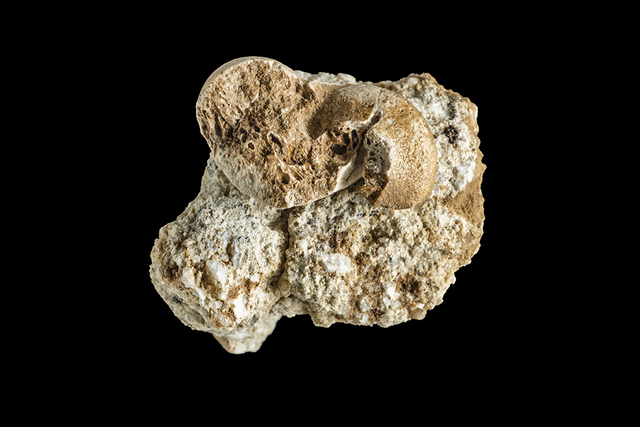
Andegameryx
Fragments of tooth, humerus, femur, and talus
La Encinilla (Colmenar Viejo)
Lower Miocene (23-16 Ma)
This site, La Encinilla (recreation centre), has yielded the oldest collection of mammals in the Madrid region. It is located in a small depression near the mountain range, and it is interpreted as a sedimentary remnant from the Miocene. The fossils are embedded in extremely hardened siliceous sediments which, externally, resemble the granites of the area.
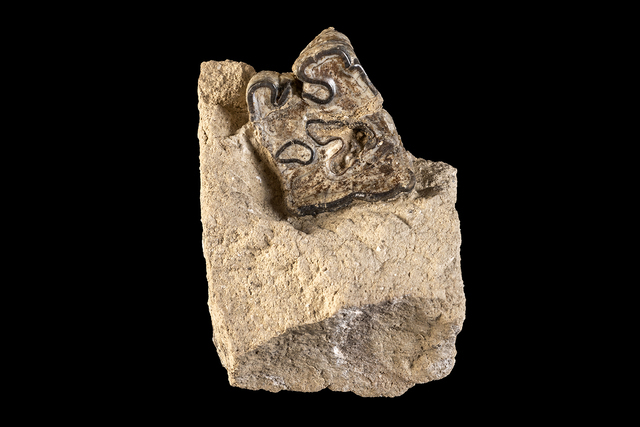
Hispanotherium matritense
Upper molar
Paseo de las Acacias (Madrid)
Middle Miocene (16-11 Ma)
The construction of the so-called “Green Railway Corridor” in the 1990s brought to light a large number of fossil remains, including those associated with the so-called “Hispanotherium-bearing faunas” dating back just over 14 Ma. These are characterised by the presence of a fossil rhinoceros named Hispanotherium matritense, which is present in many sites in the city: Paseo de las Acacias, Marqués de Monistrol, Fábrica Mahou-Paseo Imperial, and Barajas Airport.

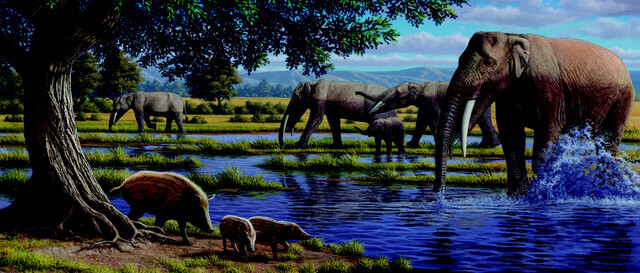 Landscape of the region about 14 million years ago (this reconstruction is based on the Hydroelectric Power Plant site, Madrid)