14. CARNIVORES: MACAIRODONTININE FELINES
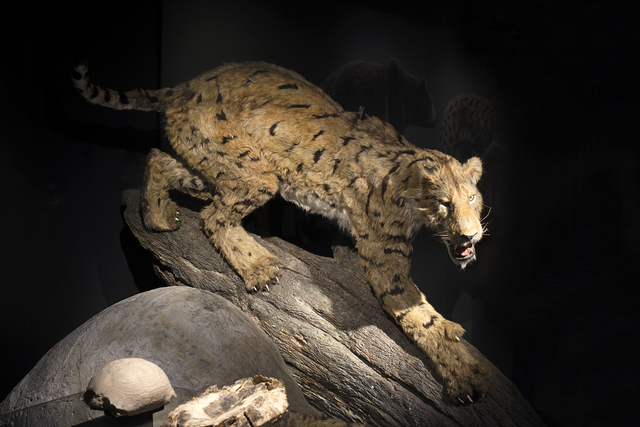
Also known as “sabre-toothed cats”, the macairodontines were relatives of the felines we know today.
The family Felidae, to which all living felines belong, includes an extinct subfamily: the macairodontines (“sabre-toothed cats”), which is characterised by long, flattened upper canines that produced the so-called “buttonhole bite” on the neck of their prey, thus causing rapid death by bleeding out.
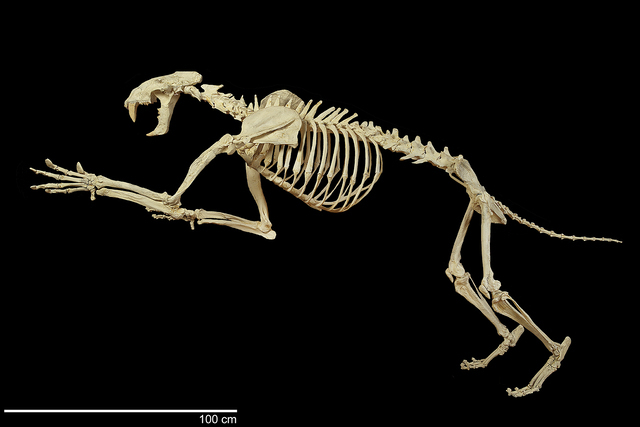
Specialised in hunting large prey with great efficiency, they were the dominant terrestrial carnivores for many millions of years. Their skeleton indicates that they could accelerate suddenly, and thus reach their prey in a few leaps, although with little stamina needed while running. Machairodus aphanistus, one of the oldest members of this spectacular group of carnivores, is present in Cerro de los Batallones.
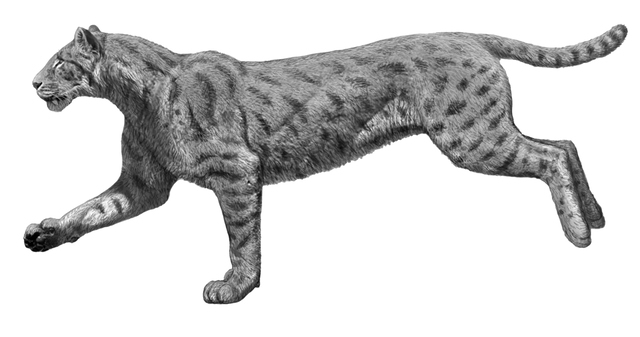 Genus: Machairodus
Species: Machairodus aphanistus
Shoulder height: 1 m
Period: Upper Miocene
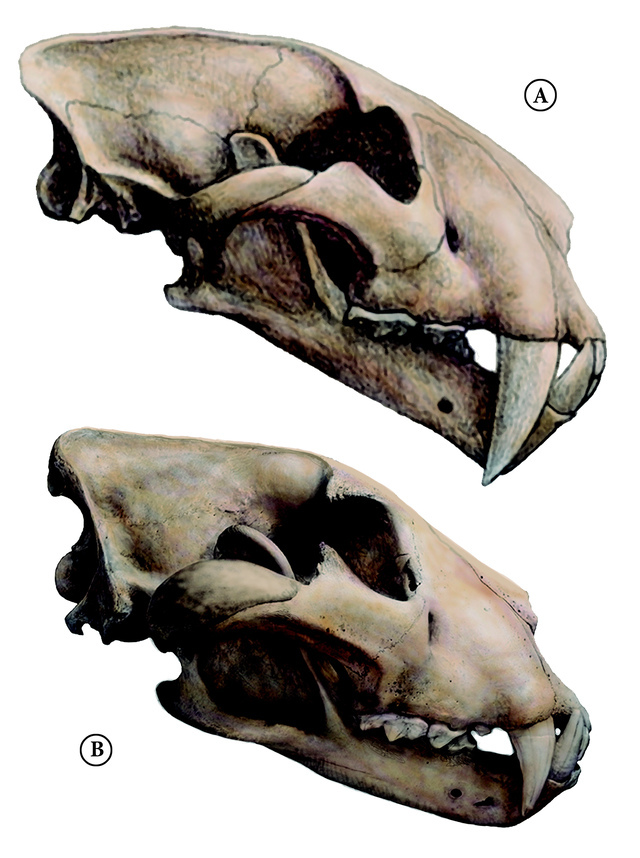 Comparison between the skull of Machairodus (A) and the skull of extant felines (felines still in existence), such as the lion (B).
They are distinguished by longer and flatter upper canines, a more vertical chin, larger carnal teeth, and changes in the muscular insertion of the rear of the skull.
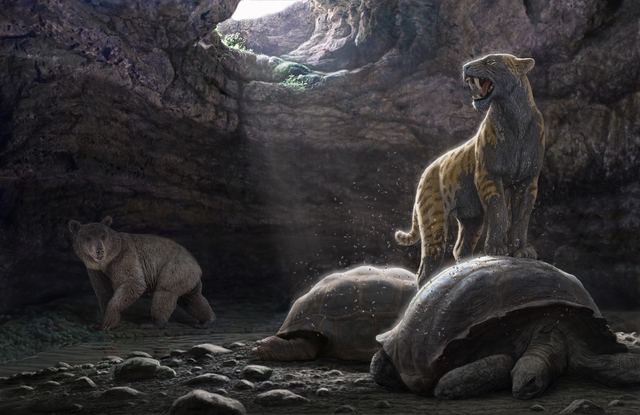 Reconstruction of one of the caves at the Cerro de los Batallones site.
Illustration: M. Antón