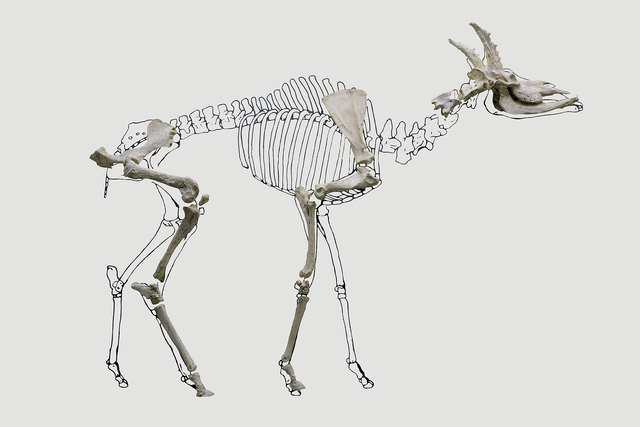
24. GIRAFFES: DECENNATHERIUM REX
Giraffids are a group of large ruminants characterized by a special type of cranial appendage, known as ossicones. These varied in number (up to 5), position on the skull, and size, reaching almost 2 m in some extinct species.
Family Giraffidae, currently represented by two African genera (Okapia and Giraffa), was in great abundance and diversity during the Neogene (Miocene and Pliocene), with species found on all continents of the Old World (Ancient Africa and Eurasia), before their decline and extinction in Eurasia at the end of this period.
Miocene giraffes on the Iberian Peninsula were virtually unknown during the Upper Vallesian period (between 11 and 9 million years ago), until the discovery of the Cerro de los Batallones fossil sites. It is at this group of sites that we find the best fossil evidence of giraffids from Western Europe.
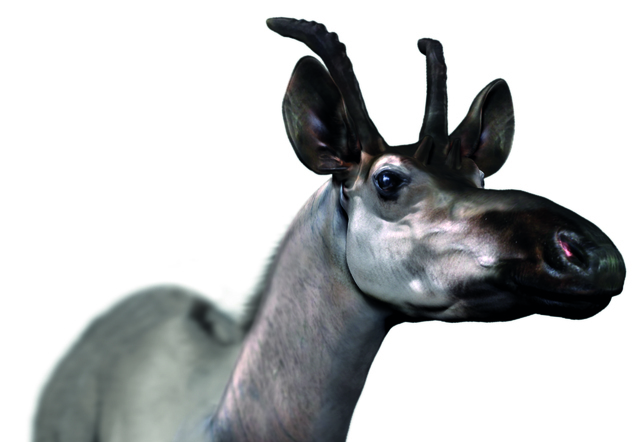
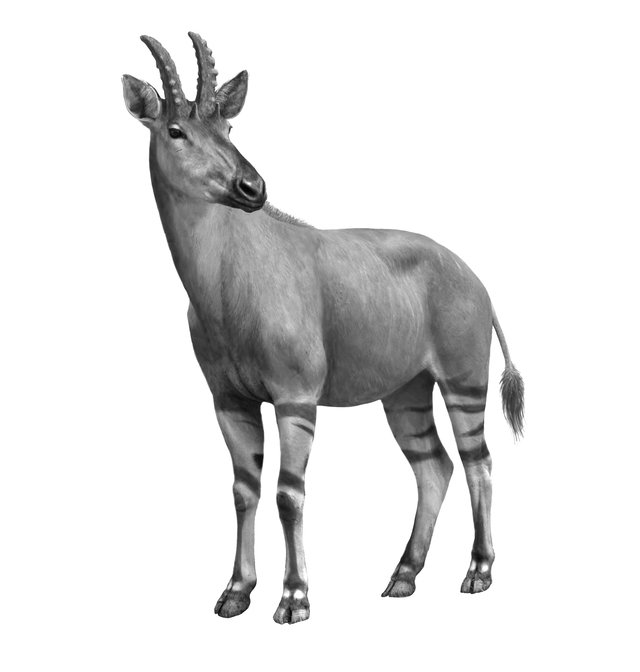 Genus: Decennatherium
Species: Decennatherium rex
Height at shoulders: 2 - 2.5 m
Period: Upper Miocene
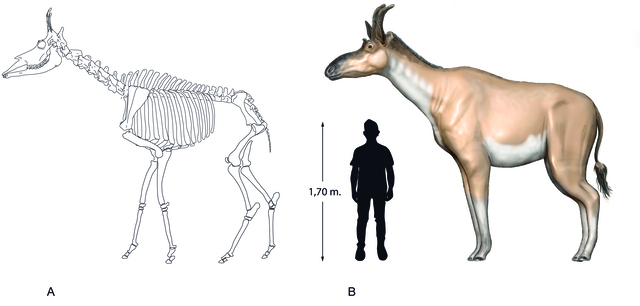 Reconstruction of Decennatherium rex, a large giraffid from the Late Miocene of Cerro de los Batallones. This species belongs to the sivaterine giraffids, which are characterised by their short necks (unlike the elongated necks of modern giraffes). However, they reached more than 2 m in height at the withers, and weighed over 1000 kg. They had four cranial appendages, two of which were above the orbits, and two larger frontoparietal appendages. Analysis of their cranial anatomy indicates that they had a grazing or mixed diet, unlike modern giraffids, which are browsers (with plant food gathered from tree branches).