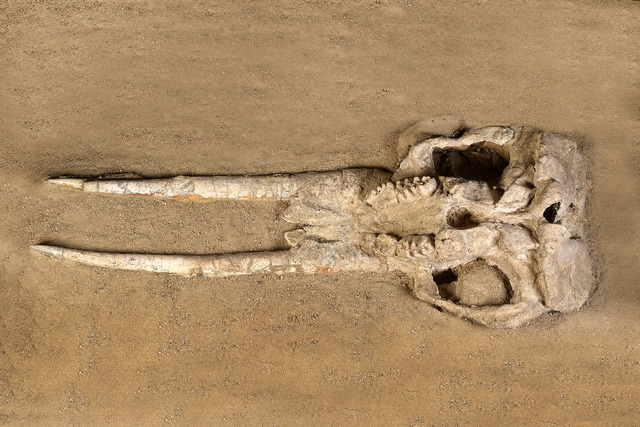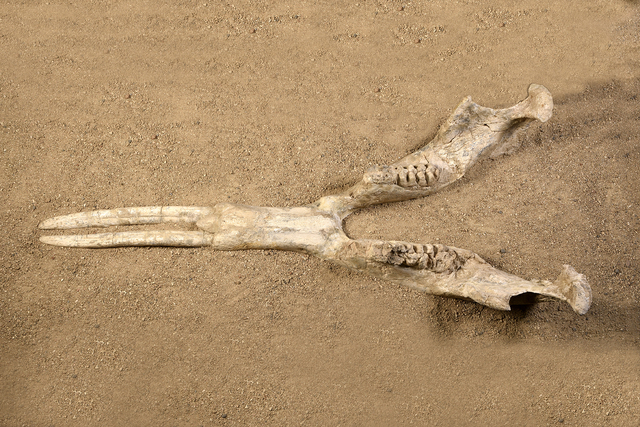
25. MASTODONS (PROBOSCIDEANS): TETRALOPHODON LONGIROSTRIS
The order Proboscidea currently has only three species, but this order had once achieved great diversity, and was comprised of 18 different families. Of these families, only Elephantidae survives to the present day.
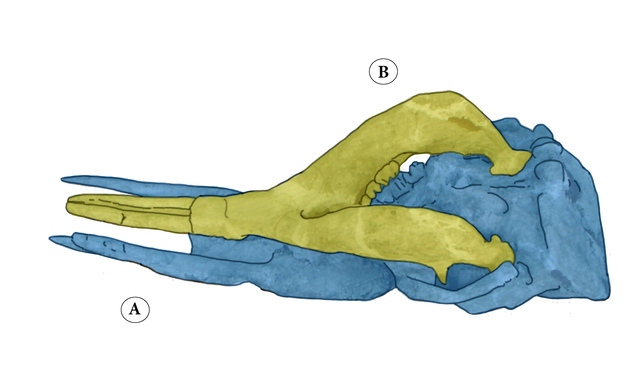
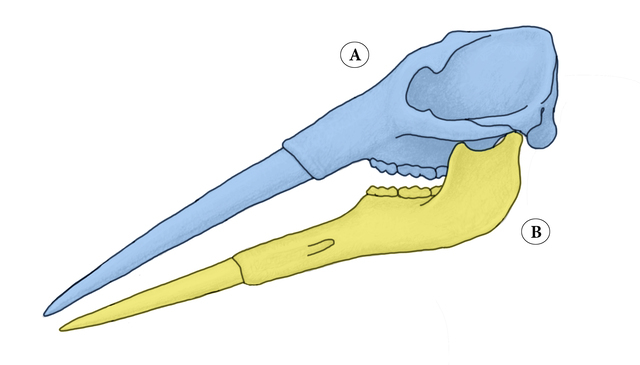
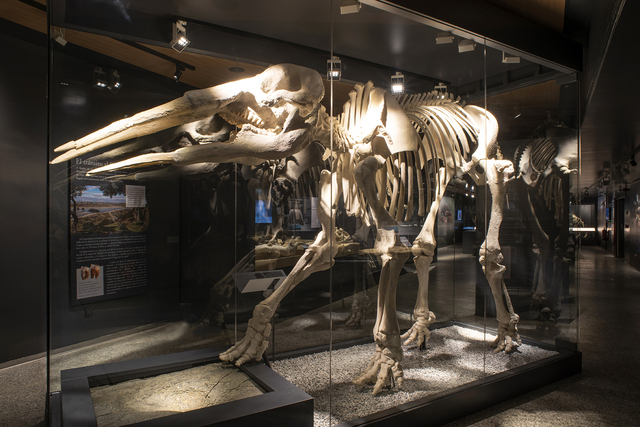
For much of the Miocene, gomphotheres (mastodons) were the dominant proboscideans in the Iberian mammal fauna. Unlike elephantids, gomphotheres also had a second set of tusks attached to the lower jaw, housed in their highly elongated jaw. The height at the shoulders of this animal would have reached 2.2 m.
Tetralophodon longirostris replaced Gomphotherium during the Upper Miocene. It was larger (height at shoulders: 3 m), and had molars adapted to a more fibrous diet, perhaps in response to the aridification of the time.
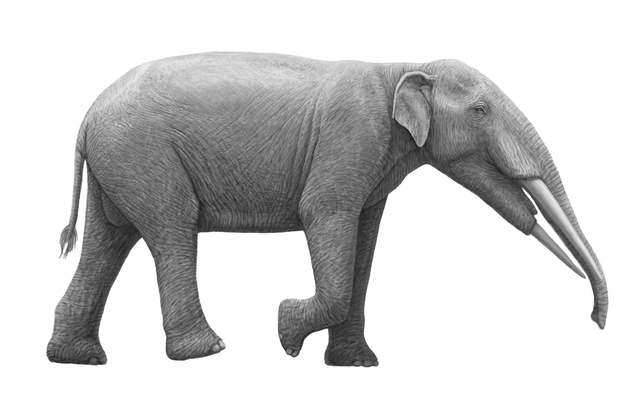 Genus: Tetralophodon
Species: Tetralophodon longirostris
Height at shoulders: 3 m
Period: Miocene to Pliocene
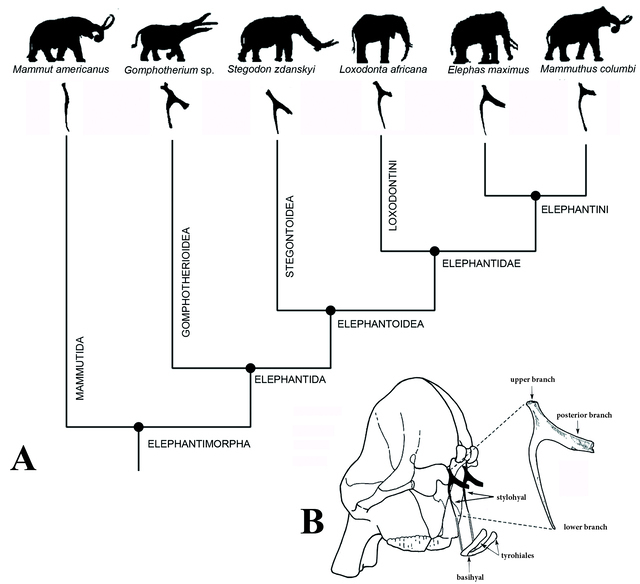 Phylogenetic position of gomphotheres (A), established from the anatomy of the hyoid bone (B). This bone plays very important roles in proboscideans, and is related to feeding and sound production. Gomphotheres are native to Africa, but from the upper part of the Lower Miocene, they rapidly spread throughout Europe, Asia, and North America.
Illustration: After Shoshani and Tassi
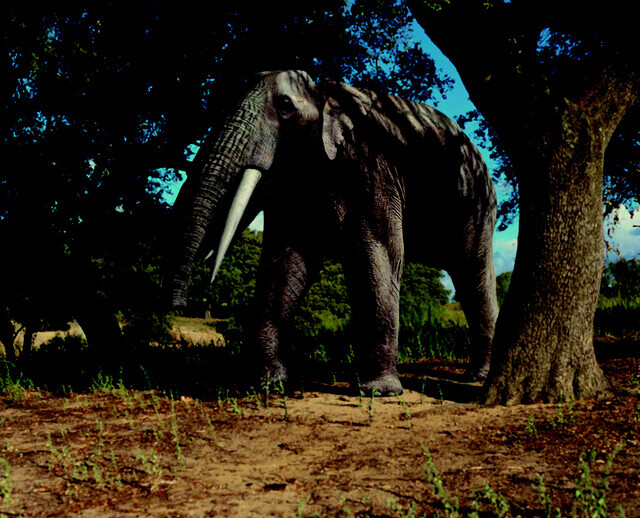 The characteristic mastodon of the Upper Miocene in Madrid, Tetralophodon longirostris.
Illustration: M. Antón