Equids are currently represented by donkeys, horses, and zebras. Originating from North America, these horses colonised Eurasia during the Miocene.
The genus Hipparion is part of the family Equidae (horses, zebras, and donkeys). It replaced Anchitherium, a more primitive equine, and is one of the most abundant and typical fossils of the Upper Miocene and Pliocene of the Iberian Peninsula, which is why fossil assemblages with this species have been named as “Hipparion faunas”. The fossil record of Hipparion is very abundant in Eurasia.
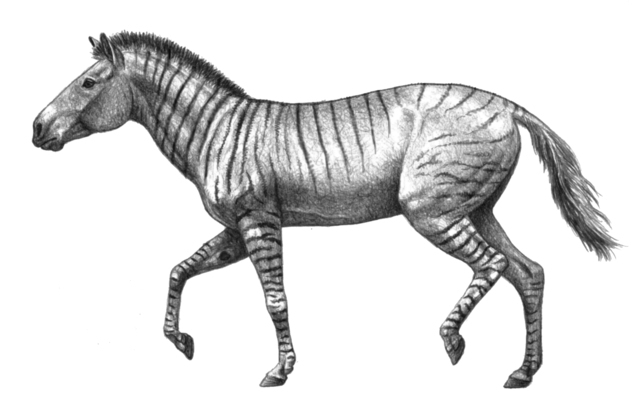
Species of the genus had relatively short faces and teeth that, as with the teeth of modern horses, functioned as grinders, allowing them to eat almost any type of plant, even those that were tough and fibrous. They had also begun to shorten the lateral toes of their feet, favouring the central toe, which facilitated running.
Genus: Hipparion
Species: Hipparion sp.
Height at shoulders: 135 cm
Period: Upper Miocene
Reconstruction of the three species of the genus Hipparion. From largest to smallest: Hipparion primigenium, Hipparion matthewi, and Hipparion periafricanum. The differences in size of fossil equids have been linked to different environmental conditions; whereby, the largest fossil equids would correspond to cold climates, open habitats, and/or soft soils, with more running species. Drawing: M. Antón
Display Case
Hipparion sp.
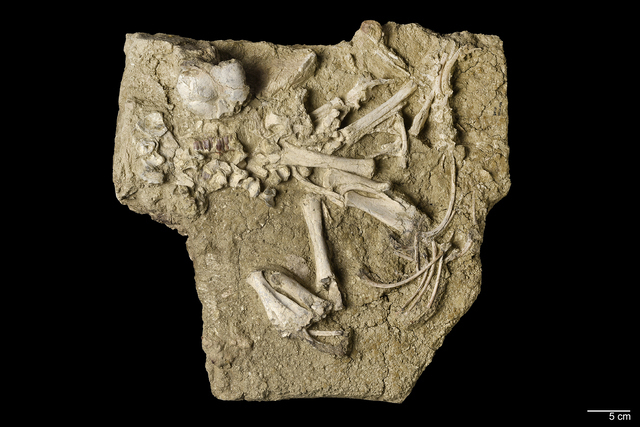
Assemblage of bones
Cerro de los Batallones 1 (Torrejón de Velasco)
Upper Miocene, Vallesian (10-8 Ma)
Block containing an assemblage of juvenile Hipparion sp. bones from the Cerro de los Batallones 1 site. The presence of an individual Hipparion sp. with tooth germs (tooth buds), bony epiphyses, and a larger size suggests that it was somewhat older than the specimen from Cerro de los Batallones 10, which was still in the fetal stage.
Hipparion sp.
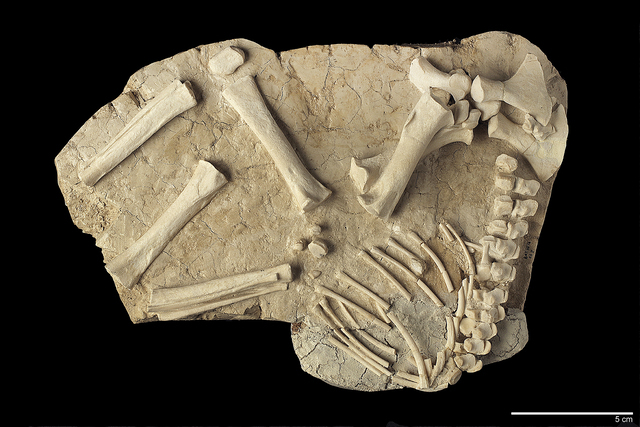
Assemblage of bones
Cerro de los Batallones 10 (Torrejón de Velasco)
Upper Miocene, Vallesian (10-8 Ma)
Block with the remains of an unborn Hipparion sp. from the Cerro de los Batallones 10 site. This specimen was probably still in the womb of its mother.
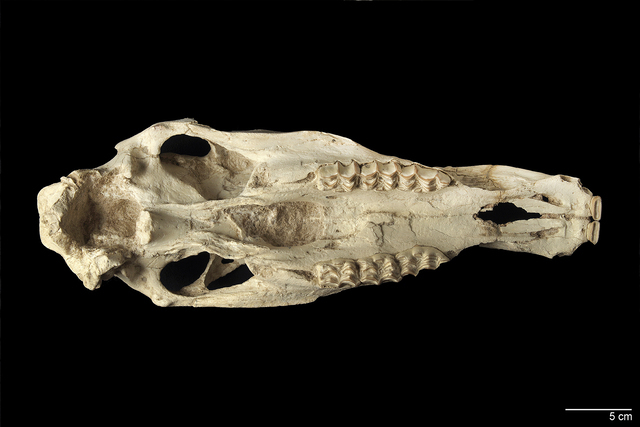
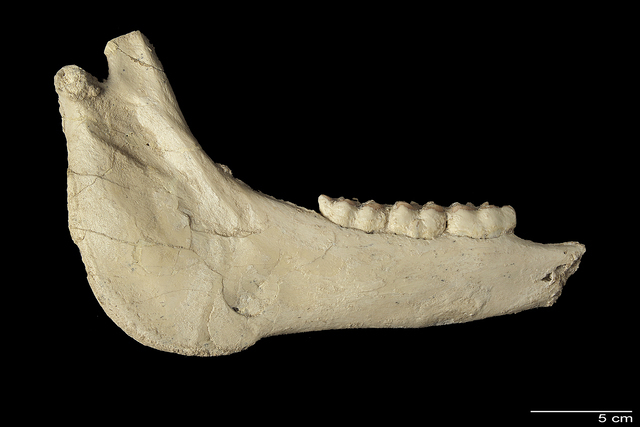
Hipparion sp.
Skull and hemimandible
Cerro de los Batallones 10 (Torrejón de Velasco)
Upper Miocene, Vallesian (10-8 Ma)
Skull and hemimandible of a juvenile Hipparion sp. from Cerro de los Batallones 10.
The dentition is primary (deciduous) and has not yet been replaced by the adult teeth.
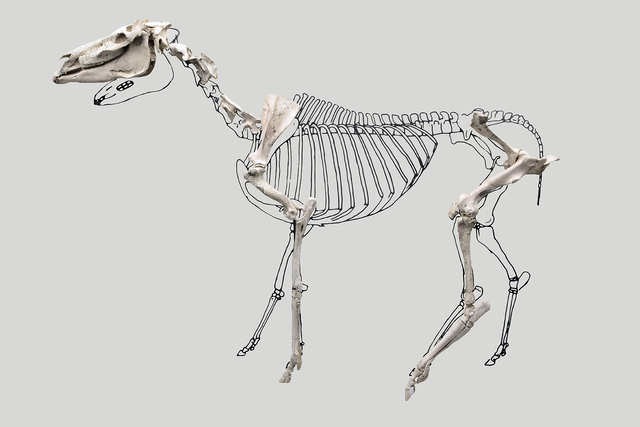
Anatomical assemblage of Hipparion sp.
Cerro de los Batallones 1 (Torrejón de Velasco)
Upper Miocene (10-8 Ma)
Anatomical assemblage constructed from the remains of several individuals. The horses from Cerro de los Batallones are represented by two species of the genus Hipparion. The state of preservation of the remains at the Cerro de los Batallones site is exceptionally good, with individuals of almost all ages preserved, including some fetuses.

 Genus: Hipparion
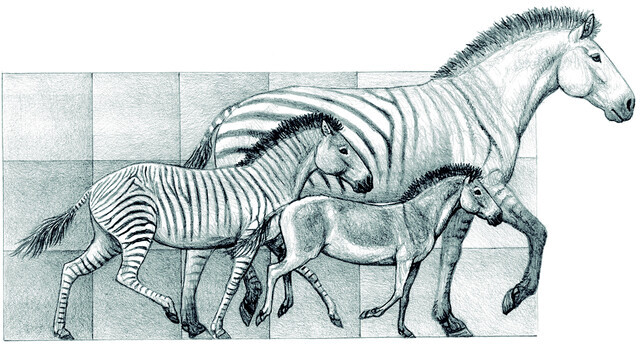 Reconstruction of the three species of the genus Hipparion. From largest to smallest: Hipparion primigenium, Hipparion matthewi, and Hipparion periafricanum. The differences in size of fossil equids have been linked to different environmental conditions; whereby, the largest fossil equids would correspond to cold climates, open habitats, and/or soft soils, with more running species.