21. RHINOCEROSES: ACERATHERIUM
Rhinoceroses and related forms constituted a large lineage of herbivores. Of the approximately 300 known fossil species, only six species have survived to the present day and several are in danger of extinction.
The fossil record of the rhinoceros is abundant and diverse. The earliest forms of rhinoceros, with no horns, were no larger than a sheep.
During the Oligocene and Miocene, rhinoceroses became one of the most abundant herbivore groups; their ecomorphological diversity increased, from small, graceful runners to heavy, elongated-bodied, very short-legged animals, that were similar in proportion to hippopotamuses of today.
Miocene rhinoceroses are represented by two morphological types: aceratine (without nasal horns), and rhinoceros (with nasal horns).
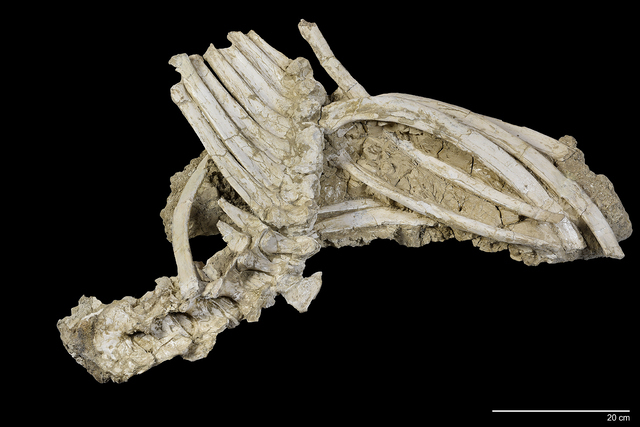
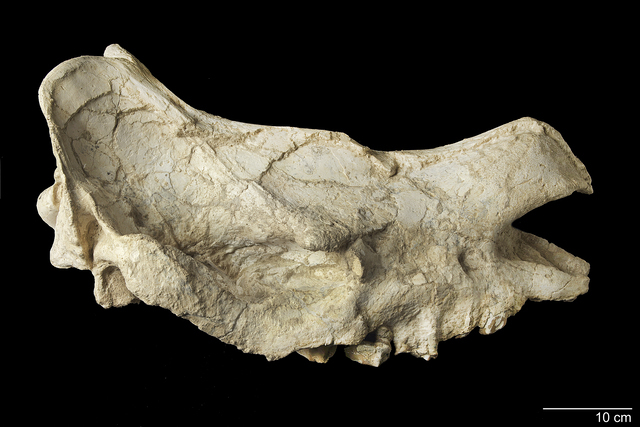
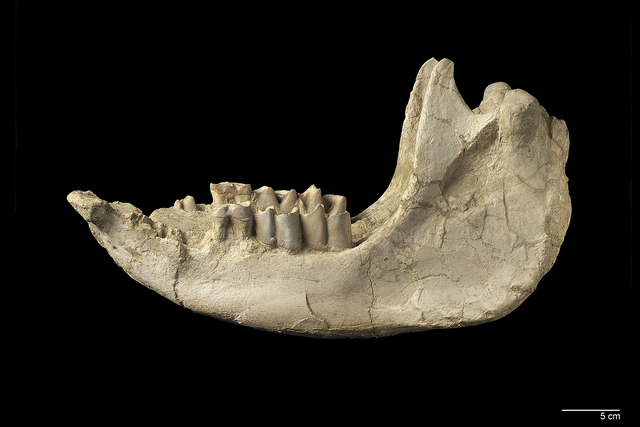
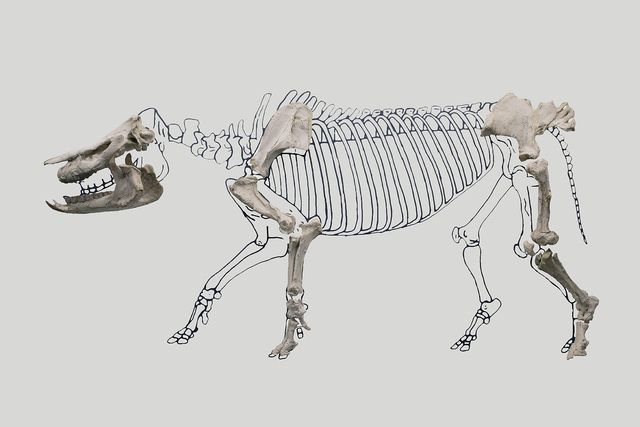
Aceratherium is one of the hornless rhinoceros species, that was typical of the Upper Miocene of Europe.
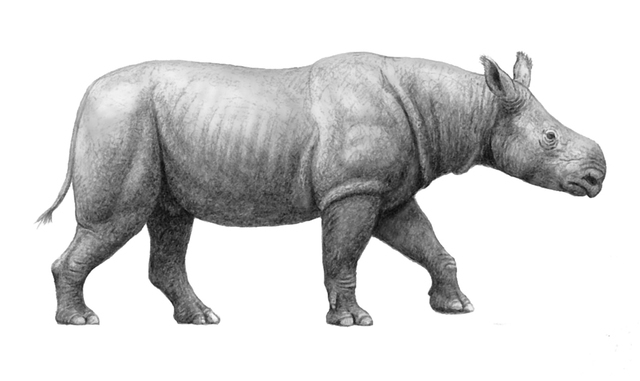 Genus: Aceratherium
Species: Aceratherium incisivum
Shoulder height: 120 cm
Period: Miocene
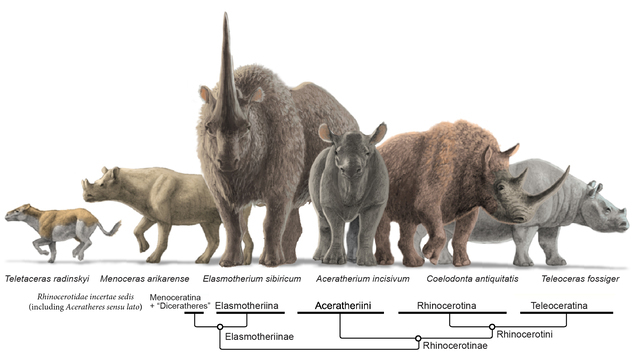
Anatomical reconstruction of the most representative species of the main groups of rhinoceroses. From left to right: Teletaceras radinskyi, Eocene of North America; Menoceras arikarense, Menoceratina from the Oligocene of North America; Elasmotherium sibiricum, Elasmotheriina from the Pleistocene of Eurasia; Aceratherium incisivum, Aceratheriina from the Upper Miocene of Eurasia; Coelodonta antiquitatis, Rhinocerotina from the Pleistocene of Eurasia; and Teleoceras fossiger, Teleoceratina from the Miocene of North America. Height at the withers (highest part of the back) of E. sibiricum: 2.5 m.
Drawing: O. Sanisidro