12. CARNIVORES: URSIDS
The Miocene of Madrid provides primitive forms of fossil bears, that are related to the giant panda.
Bears are carnivores that are characterised by their large size. They are only recorded in the Iberian Peninsula from the Lower Miocene, but the Madrid fossil record is especially rich from the Late Miocene onward. Indarctos arctoides was the first modern bear species to appear in the Madrid fauna.
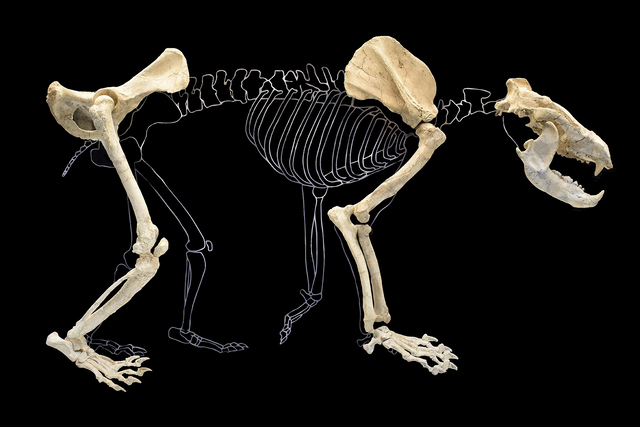
Because of its large size, which is similar to the size of a brown bear, its skeleton was more similar in proportions and morphology to the skeleton of the modern giant panda. Its gait is considered plantigrade, because it supported itself with the palms of its hands and feet when walking, thus allowing it to move in diverse habitats: from areas with dense vegetation to steep hills.
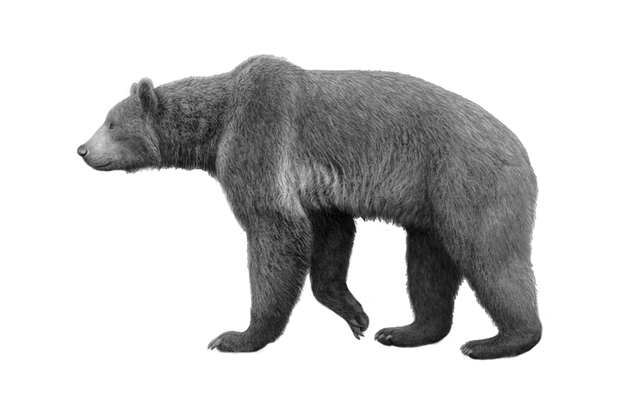 Genus: Indarctos
Species: Indarctos arctoides
Shoulder height: 1 m
Period: Upper Miocene
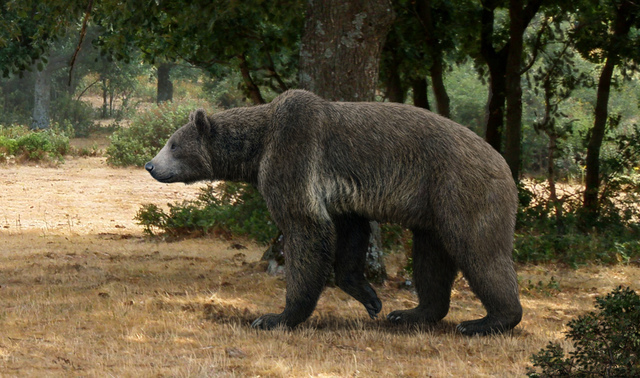 Indarctos arctoides would have had a primarily omnivorous diet, albeit with a large amount of plant components.
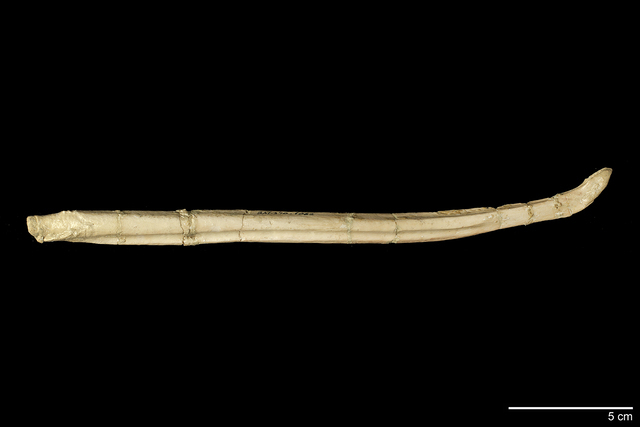
Furthermore, one of the most striking features of its anatomy was the development of a false thumb that was used for manipulating food.
Illustration: M. Antón