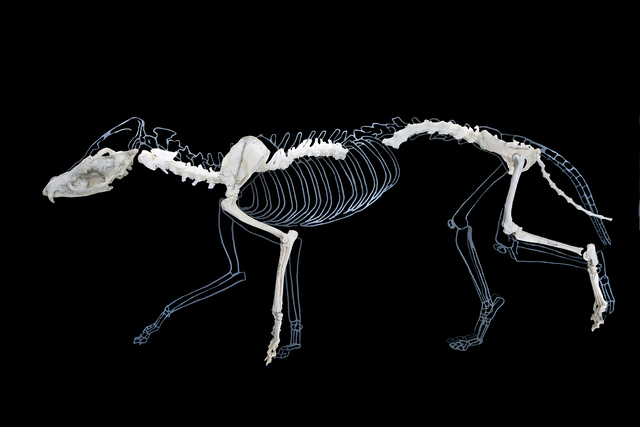
18. CARNIVORES: THE HYENIDS
In Madrid, during the Miocene, hyenas were represented by a very primitive species, about the size of a jackal: Protictitherium crassum.
Protictitherium crassum was one of the most primitive species of the hyena family. It was characterised by its small size, and appearance similar to canids (foxes) or viverrids (genets). Its fossil presence in Madrid sites during the Miocene is very rare, but the Cerro de los Batallones site has the best fossil record of this species in the whole world.
It inhabited the Iberian Peninsula from the Lower Aragonian and for approximately 12 million years, both in forested areas and in the wooded grasslands that were characteristic of the Miocene.
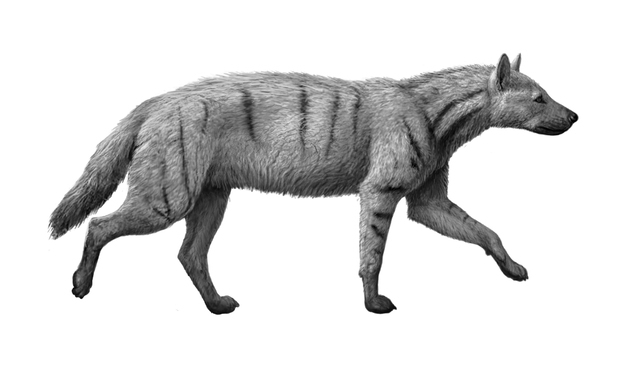 Genus: Protictitherium
Species: Protictitherium crassum
Height at shoulders: 30 cm
Period: Middle Miocene and Upper Miocene
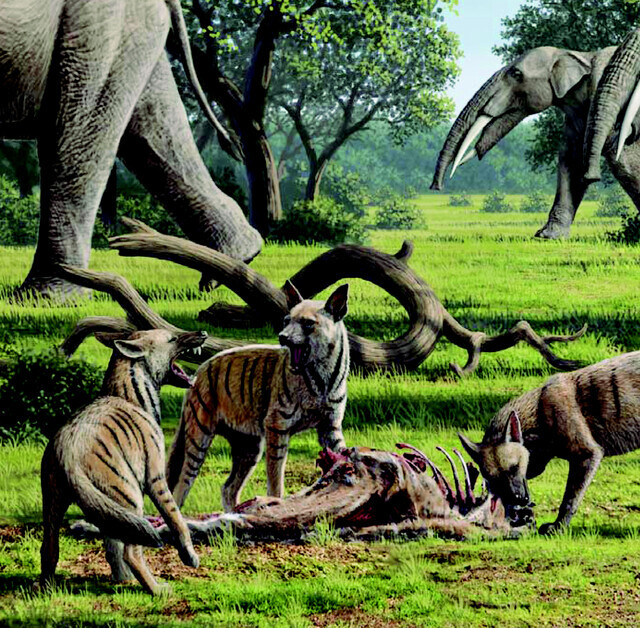 The skeleton of this hyaenid was adapted to running; it would have followed a varied diet, typical of an opportunistic carnivore. Like jackals, hyenids could have been excellent and active hunters of small vertebrates, such as rodents, rabbits, or birds, although their diet would occasionally include carrion that was left by other predators. Their habitat would always have sufficient vegetation cover for them to find shelter.
Illustration: M. Antón